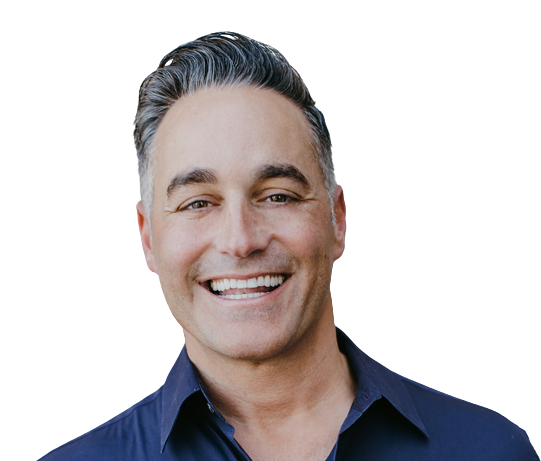
About the Author: Steve Ward
Steve Ward is the Owner and CEO of Master Matchmakers and a second-generation matchmaker who built the firm alongside his mother and co-founder JoAnn Ward. He hosted and executive-produced VH1's Tough Love for six seasons, co-authored Crash Course in Love (Simon & Schuster), and has been featured as a dating expert by CNN, the Today Show, Oprah, Glamour, People, and Cosmopolitan. He has spent more than 25 years personally coaching and matching relationship-minded singles nationwide.
Quick answer: Master Matchmakers has a person verify every candidate's identity, age and photos, run a background check and interview them before any introduction. AI matchmaking uses software to rank profiles; what it vets depends on the checks each service adds, such as the selfie or ID verification some apps describe. Fees start at $3,500.
AI matchmaking sells a simple idea: let software read the profiles and hand you the few worth meeting. Whether that suits you depends less on how clever the ranking is than on a plainer question. Before you sit across from someone, what has been checked about them, and who checked it?
I should say where I stand. At my firm, people do that checking, on every candidate, before any introduction.
What a Person Checks Before You Meet Anyone
At Master Matchmakers, a candidate is not introduced to anyone until our team has verified their age, identity and photos, run a criminal and public-record background check, and interviewed them. Our site puts the rule in one sentence: "When we verify someone's age, identity, photos, run a background check and interview them, they're qualified for representation." Every candidate goes through it before they are introduced.
Then the two of you take over. Each of you sees the other's verified photos and a detailed profile, and you talk by phone. Nobody agrees to meet until after that call, and there are no blind dates anywhere in our process.
Two more things happen around each introduction. When the right person is not already in our network, we go looking: in the words of our pricing page, "we actively recruit new candidates who fit your criteria." And after a date, our team gathers candid feedback from you and uses it to shape the next introduction.
What AI Matchmaking Works From
The engine of AI matchmaking is software that sorts and ranks profiles. It reads what members give it: the answers they type, the preferences they set, the photos they upload. From those inputs it produces a short list of people it scores as likely fits.
That is real work, and software does it well. It can compare far more profiles than any person could read, and it applies a long list of preferences the same way every time. If what you want is a wide pool sorted quickly, an AI matchmaker is designed around that.
Testing What Members Enter
What a ranking cannot do on its own is test its inputs. A compatibility score says two profiles fit on paper. It says nothing about whether the paper is true, because the score is built from the same answers it would need to check.
Omissions are the harder case. A model weighs what it is given, so if a member leaves something out, the ranking has nothing to weigh, however good it is. Catching an omission takes a check against something outside the profile. That is why the useful question about any AI matchmaking service is which checks sit on top of the matching, and who runs them.
What Tinder, Hinge and Bumble Say Their Checks Do
Three of the most familiar dating apps describe verification features on their own pages, which we read in November 2026. None of them is a matchmaker, but their wording shows what a verification step can be built to establish.
Tinder's safety page explains its Photo Verified badge plainly: "To get Photo Verified, users must submit a short video selfie which is compared to their profile photos using facial recognition technology." Members who pass can also choose to receive messages only from other Photo Verified members.
Hinge's App Store listing describes Selfie Verification, which it says "makes it easier for daters on Hinge to ensure that they are who they say they are." Bumble's listing encourages members to get ID verified, "like the majority of our community." A safety post on Bumble's own site describes Photo Verification, "to help make sure your potential match is who they say they are."
Tinder's check, as its page describes it, answers one question well: is the person holding the phone the person in the pictures? Catfishing, someone posing behind another person's photos, turns on exactly that question, and having it answered before you reply to anyone is worth having.
Which Question Each Check Answers
Verification is not one thing. Each kind of check answers its own question, and some of them only work once an earlier one is done.
- Photo or selfie check. Is the person on the phone the person in the photos?
- ID check. Does a government document tie that face to a legal name?
- Background check. What do criminal and public records show for that name? A records search is only as good as the identity it searches, which is why it comes after the ID check.
- Interview. How does the person describe their life and what they want, when someone can ask a second question?
- Your own phone call. Does this person sound like someone you want to sit down with? Nobody can make that call for you.
A service can offer any of these, in any combination. When you compare services, AI or human, ask which of them each one runs, and on whom. Then ask whether each one is finished before anyone is introduced to you. The order matters as much as the list.
What Each Approach Can Vet, Side by Side
| |
AI matching software |
A human matchmaker |
Master Matchmakers |
| Who chooses the candidates |
Software ranks the profiles in its pool |
A person, working from the firm's network |
Our team, from our network or by recruiting for you |
| What the choice is built from |
Answers, preferences and photos members enter |
What the matchmaker learns from you and from each candidate |
Your consultation, plus each candidate's verified profile and interview |
| Identity and photo checks |
Depends on the service; read its own pages |
Depends on the firm; ask |
Age, identity and photo verification on every candidate |
| Background check |
Depends on the service; ask who runs it and on whom |
Depends on the firm; ask who runs it and on whom |
Criminal and public-record check on every candidate |
| Before the first meeting |
Depends on the service |
Depends on the firm |
Verified photos, a detailed profile and a phone call |
Every Candidate Checked by a Person
Master Matchmakers
Since 2001, more than 65,000 singles have come through our private network, and people do the matching from the first consultation onward. Fees start at $3,500, and the more open you are about who and where you will be matched, the lower the fee.
When Software Is the Better Fit
Software matching suits someone who wants plenty of choice, trusts their own read of a profile and likes to set the pace. Turn on whatever verification the service offers. Then read its own pages on what that verification covers before you rely on it.
A human matchmaker makes more sense when you want a person choosing each candidate for you. That tends to be true of people with little spare time, a visible career, or an experience that made them wary of strangers. At Master Matchmakers, the verification, the background check and the interview are all done before a name ever reaches you.
Frequently Asked Questions
Is AI matchmaking a thing?
Yes. AI matchmaking describes services where software does some or all of the choosing, ranking members from the answers, preferences and photos they provide. What else a service checks varies from one to the next, so read its own pages on identity, photo and background checks before you rely on its suggestions.
Can AI replace a human matchmaker?
For sorting a large pool, software is faster than any person. A ranking still depends on what members tell it, so confirming who they are takes separate checks, whichever kind of service you choose. At Master Matchmakers, people verify identity and photos, run a background check and interview every candidate before an introduction.
What does a human matchmaker verify?
It depends on the firm, so ask. At Master Matchmakers, every candidate passes age, identity and photo verification, a criminal and public-record background check and an interview before being introduced. You then see verified photos and a detailed profile, and you talk by phone before deciding to meet.
Pick the Check, Then the Service
Claims about match quality are hard to test before you pay. Checks are easy to test: ask for them by name, ask who performs them, and ask in what order. Decide which ones you need done before a first meeting, then choose the service that does those. If your list includes a background check on every candidate and a phone call before anyone meets, a conversation with my team is a sensible place to start.